
Maui Minded
- John Santoni
- May 10
- 3 min read

Updated: May 12

Sunrise illuminates the island of Kaho'olawe, as seen from lava shores of South Maui
We are again returning to South Maui this summer, staying at the same location we have visited for many consecutive years since 1995. We have visited all of the permitted Hawaiian islands, but always return to our first love. I have come to realize what is important to me about revisiting these islands, and it's not snorkel boat trips to Molokini, or golfing on the oceanside. These are undoubtedly wonderful and unforgettable experiences to enjoy here, but they are not what calls me back to the island again and again. Maui Minded
In "Finding Meaning on Maui" in the Spring/Summer 2026 issue of Hawai'i magazine, writer and Maui native Grace Maeda so eloquently professes her love for her home island, in words as soft and sweet as a Kihei morning. She tells us about the changes that Maui has gone through since her childhood days. Having visited Maui frequently over the course of 30 years, I can relate to the bittersweet nostalgia and the subtle feeling of loss induced by these memories. In contrast, Grace also speaks of the constants that are present on the island, the things that cannot be sold or taken away; the sun rising over Haleakalā, the crisp air of upcountry Pukalani, the grounding and introspection when visiting 'Iao valley. And, most importantly, the spirit and philosophies of the people who make this island their home.
From an early age, Hawaiians learn the importance of a symbiotic relationship with Earth and all of its inhabitants, and that survival of the species requires a stewardship of nature's ecosystems for the good of all beings and environments. "Mālama ʻāina is a foundational Hawaiian phrase meaning "to care for the land," representing a deep stewardship and respect for the environment. It signifies that land is a relative, not a commodity, providing food and life while requiring protection, sustainability, and harmony from the community (mauka to makai)." -Office of Hawaiian Affairs
When I review what we in Western Christian culture were taught as children, I see a disparity in core philosophies. Although the original intention and meaning of the idea of "dominion" over creation may have been to encourage man to "to till it and keep it", the credo has been distorted into a belief in some sort of authoritarian control over Earth, and a right to exploit it at will.
Sadly, a recent news story exposes in full color this rift in philosophies. A 37-year-old man from Washington state was captured on video throwing a large rock from a Maui beach at a monk seal swimming in shallow water, narrowly missing her head. My personal philosophy does not allow understanding the motivation behind doing something like this, but if we look closely into our "mainland" beliefs, we may understand that some may have the view that a wild animal is just something for our entertainment. The man was detained and will face a federal investigation. I just can't help wondering how any belief system could justify or make that in any way an acceptable act in the first place.
As always, I plan to make many images on this upcoming visit, but with much clearer intentions this time. Getting back to the "why' of my work, I will return with photographs and stories that I hope will have an influence toward a better, more reciprocal relationship between humans and the natural world.
In the last line of her Editor's Note, Grace writes, "By adopting a fresh perspective, my hope is that you find a renewed sense of appreciation for Hawai'i–and wherever you call home, too".
Aloha and Mahalo, Grace, for reminding me of my greater purpose.

Sacred hale at Kepaniwai Park & Heritage Gardens
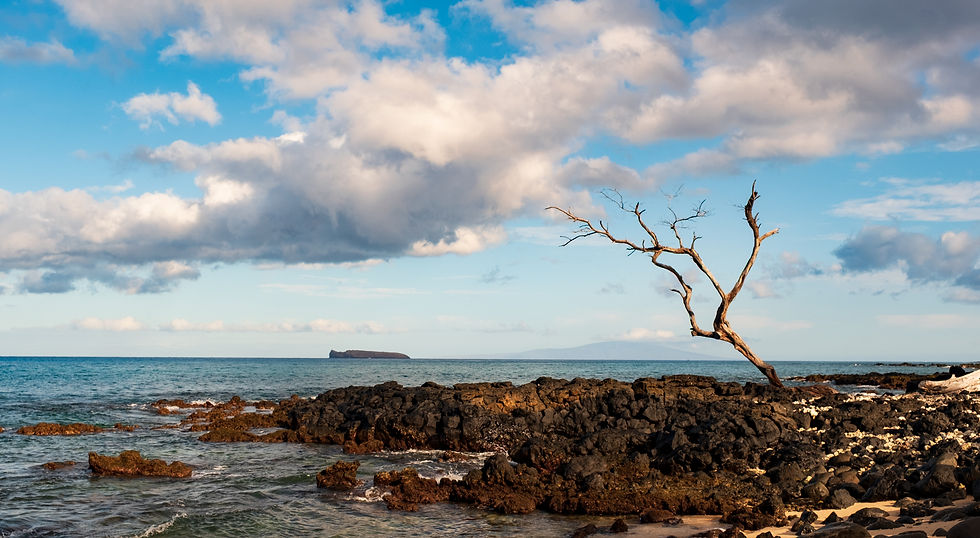
Molokini crater off the shore of South Maui

The island of Lana'i, from a Kihei rooftop, as tourist boats race back to the harbor

Produce stand, Kihei.

Triangular mountain and lush foliage at Kepaniwai Park & Heritage Gardens

Lazy afternoon view through Kihei window


Comments